
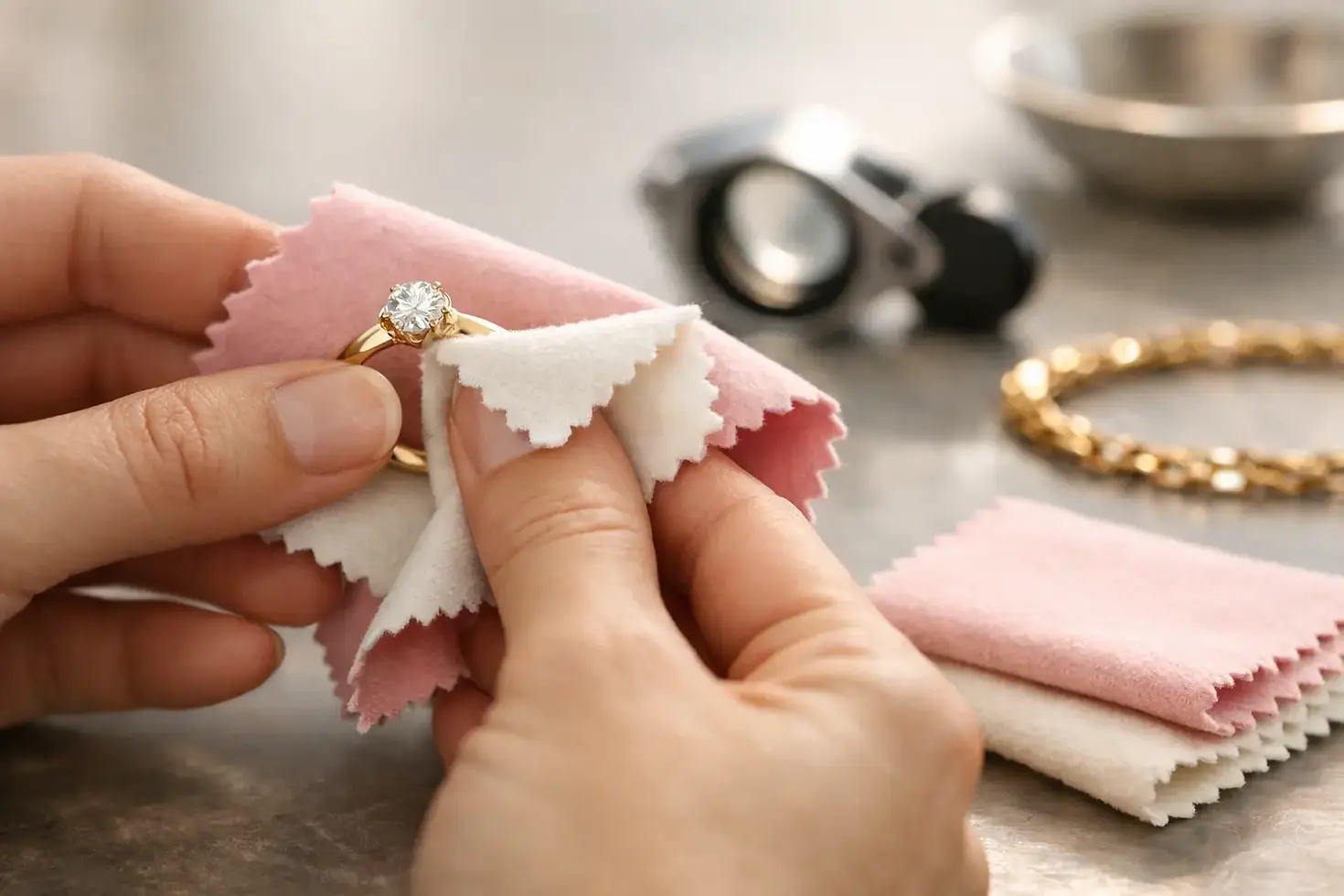
Custom Polishing Cloth for Jewelry That Builds Value
- miller194
- 7月30日
- 讀畢需時 6 分鐘
A jewelry sale should not lose its sense of occasion the moment the customer leaves the store. A custom polishing cloth for jewelry gives customers a practical way to care for a treasured purchase while keeping your brand in their hands, jewelry box, or travel pouch long after the receipt is gone. Small in size but highly visible in use, it can make an ordinary packaging program feel considered, complete, and distinctly yours.
For jewelers, private-label brands, and premium retailers, the strongest presentation systems do more than protect an item during transport. They reinforce the quality customers believe they have purchased. A branded polishing cloth does this quietly and effectively: it signals care, supports the ownership experience, and creates another refined point of contact with your identity.
Why a Custom Polishing Cloth for Jewelry Matters
A ring box creates impact at the moment of gifting. A shopping bag carries your visual identity through the store or street. A polishing cloth has a different value: it remains useful after the purchase. Each time a customer refreshes the shine on sterling silver, gold, or a favorite watch, your logo can be part of that ritual.
That repeated use supports brand recall in a way disposable packaging cannot. It also gives your customer something that feels genuinely helpful rather than promotional. When the cloth is soft, properly finished, and presented beautifully, it communicates that your business cares about the life of the jewelry, not simply the transaction.
This matters especially for pieces purchased as gifts, anniversary jewelry, bridal jewelry, and higher-value fashion collections. Customers often keep these items for years. Including a polished care accessory strengthens the perception that the jewelry deserves long-term attention and that your brand understands the details of ownership.
Choose the Cloth Around the Jewelry You Sell
Not every polishing cloth serves the same purpose. The right material depends on the metals, finishes, gemstones, and care expectations associated with your collection. The best custom program begins with that practical consideration, then brings in brand color, logo treatment, packaging coordination, and quantity requirements.
Microfiber for everyday care
Microfiber cloths are a popular choice for jewelry businesses because they are soft, reusable, and effective for removing fingerprints, light oils, and surface dust. They are especially well suited to routine care for polished metal, watch faces, and many gemstone settings when used gently. Their smooth surface also provides a clean base for printed branding.
For fashion jewelry, boutique collections, and brands that want an elegant insert inside a jewelry box or pouch, microfiber offers a strong balance of appearance, function, and cost control. It can feel more elevated when paired with a coordinated pouch, necklace folder, or rigid box rather than supplied as a loose accessory.
Treated cloths for tarnish concerns
Sterling silver and certain metal alloys benefit from cloths designed to help lift tarnish. These products can provide an additional care benefit, but they require more precise specification. A treated cloth may not be appropriate for every surface, particularly plated jewelry, delicate finishes, pearls, porous stones, or pieces with intentional oxidized details.
That is why the cloth should match the care guidance your team gives customers. If your collection includes multiple materials, a soft microfiber cloth with clear care instructions may be the more versatile choice. The goal is not to offer the most aggressive polishing solution. It is to offer an accessory customers can use with confidence.
Size changes the perceived value
A small cloth can be practical for rings and earrings, while a larger format feels more generous for necklaces, watches, and statement pieces. Size also affects logo visibility. A mark that looks refined on a 6-by-6-inch cloth may appear crowded on a compact square.
There is a commercial trade-off here. Larger cloths create a stronger gift-like impression but add material and packing volume. For a high-volume retail program, a smaller cloth tucked inside each box may be the right decision. For VIP orders, bridal purchases, or premium collections, a larger cloth can become part of a more memorable care kit.
Branding That Looks Premium, Not Promotional
A polishing cloth is close to the product and close to the customer. Its branding should feel as polished as the jewelry itself. Overprinting, oversized graphics, or a message-heavy layout can quickly reduce the sense of luxury. In most cases, restraint performs better.
A centered logo, a small monogram in one corner, or a subtle repeating pattern can create a sophisticated result. Color should support the broader packaging system. Deep black, warm ivory, charcoal, navy, rich burgundy, and muted jewel tones often complement fine jewelry presentation, but the best choice is the one that belongs naturally beside your boxes, pouches, shopping bags, and display materials.
Print method and logo detail deserve early attention. Fine lines, very small type, and complex gradients may not reproduce with the crispness expected on soft fabric. A simplified logo treatment can often look more premium than a full brand lockup. Share the intended artwork early so the production approach can be selected for clarity and durability.
The cloth itself should also have a clean finish. Straight edges, consistent cutting, smooth printing, and careful folding matter because customers notice craftsmanship in the smallest components. When every item in the package feels intentional, the jewelry appears more valuable.
Build It Into a Coordinated Jewelry Presentation System
A branded cloth is most effective when it is not treated as an afterthought. It should work with the rest of the presentation journey, from the sales counter to the customer’s home.
For example, a fine jewelry retailer might place a folded ivory microfiber cloth beneath a ring box insert, with a discreet gold logo that matches the foil detail on the outer box. A contemporary jewelry brand may choose a black cloth inside a branded drawstring pouch, making it easy for customers to store and clean pieces while traveling. A wholesale supplier can use consistent cloth branding across several product lines to bring a more unified retail appearance to independent stockists.
The strongest systems consider scale and placement. A polishing cloth can sit inside a box, wrap a necklace before it enters a pouch, accompany a care card, or become part of a special-order presentation. Each option changes the customer experience. Inside the box feels like a thoughtful included detail. Wrapped around the item feels protective and ceremonial. Combined with a pouch and care card feels more comprehensive.
Box Father Company Limited helps jewelry businesses coordinate these details across custom jewelry boxes, sewn soft goods, bags, and care accessories. This unified approach avoids the fragmented look that occurs when each packaging component is sourced without a shared material, color, or branding direction.
Plan for Retail Operations, Not Just Appearance
Luxury presentation must also work at the counter, in fulfillment, and across repeated orders. Before approving a custom polishing cloth, consider how it will be stored, folded, replenished, and used by staff. A beautiful accessory that slows packing or arrives inconsistently folded can create avoidable friction.
Start with the intended use case. Will every purchase receive a cloth, or only selected collections? Will sales associates add it by hand, or will it be prepacked into the jewelry box? Is it intended for e-commerce shipments, in-store gifting, repairs, or all of these? Those answers shape the most efficient size, fold, and quantity plan.
Minimum order quantities also affect the decision. If you have a seasonal promotion, a limited-edition color may be worthwhile. If you need a core cloth for year-round use, select a design that can remain aligned with your brand through changing collections and campaigns. Timeless colors and a restrained logo treatment usually make replenishment easier.
Quality review is equally valuable. Request a pre-production sample or material swatch to assess softness, print contrast, color alignment, and how the cloth looks beside your existing boxes. A digital proof confirms artwork placement, but it cannot fully communicate tactile quality. For jewelry packaging, touch is part of the brand message.
Give Customers a Reason to Keep It
The commercial value of a custom polishing cloth for jewelry comes from usefulness. Customers will keep it if it works, if it looks good, and if it feels appropriate for the piece they bought. A brief care message on an accompanying card can help clarify that gentle cleaning is recommended and that certain stones or finishes may need specialized care.
Avoid turning the cloth into a crowded advertisement. Let the product do its work. A customer who reaches for your cloth months after purchase is already receiving a reminder of the original experience: the weight of the box, the care in the wrapping, and the confidence of buying from a jeweler that pays attention to details.
The next time you refine a jewelry box, pouch, or shopping bag, consider the moment after the unboxing. A beautifully branded polishing cloth is a modest addition that can keep your presentation - and your name - part of the customer’s jewelry care ritual.


留言