

Custom Jewelry Display Solutions That Sell
- miller194
- 4月6日
- 讀畢需時 6 分鐘
A customer pauses for three seconds at a showcase before deciding whether to lean in or keep walking. In jewelry retail, that moment carries real value. Custom jewelry display solutions shape that first impression by controlling how your product is seen, how your brand is remembered, and how premium your collection feels before a word is spoken.
For jewelry businesses competing on presentation as much as product, generic trays and stock display props create a costly mismatch. A fine piece can lose impact when it sits in a display that feels borrowed, inconsistent, or visually disconnected from the rest of the brand. The strongest retail environments avoid that problem by treating display, packaging, and point-of-sale presentation as one coordinated system.
Why custom jewelry display solutions matter in retail
Jewelry is sold through detail. Size, sparkle, metal tone, texture, and craftsmanship all rely on careful presentation. A display does more than hold product upright. It frames the item, directs attention, and supports the story your brand is trying to tell.
This is where custom jewelry display solutions offer a commercial advantage. They allow you to choose materials, colors, forms, and logo applications that match your brand position. A minimalist diamond line may call for clean microfiber surfaces and restrained geometry. A fashion jewelry brand may need stronger contrast, bolder branding, and more flexible tray layouts for frequent collection changes. The right answer depends on what you sell, who you sell to, and how you want customers to feel at the counter.
There is also a practical side. Custom display systems can improve organization for sales teams, reduce visual clutter, and make it easier to present coordinated sets. When the display works well operationally, the customer experience becomes smoother and more confident.
What strong custom jewelry display solutions actually do
Well-designed displays increase perceived value by making jewelry look intentional, protected, and worthy of attention. That is especially important for brands trying to move beyond price competition. When a ring, pendant, or bracelet is presented in a display made specifically for its scale and style, customers read that as quality.
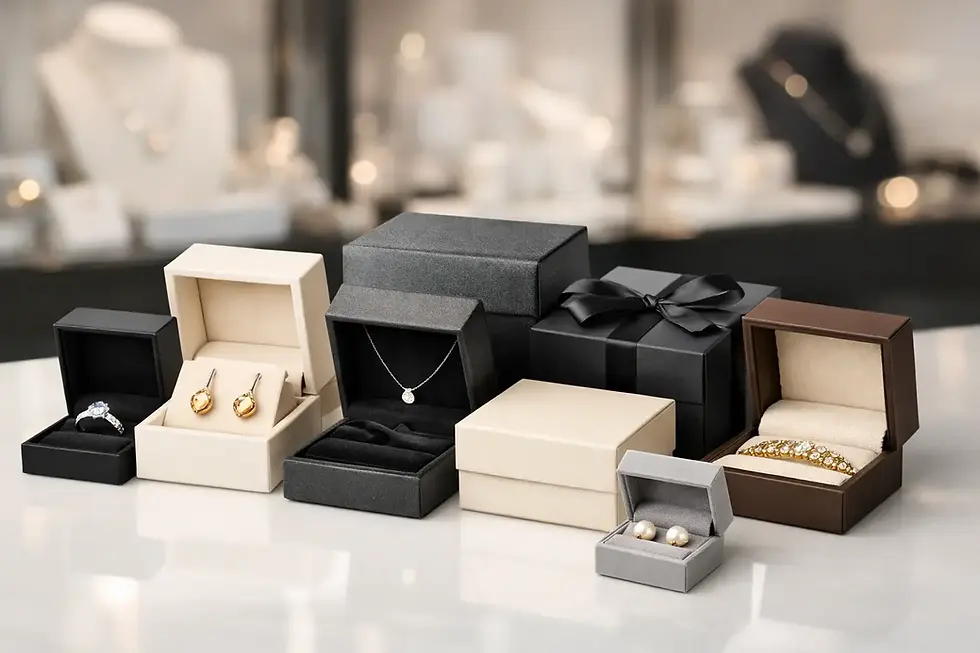
They also strengthen consistency across touchpoints. If your showcase trays, jewelry boxes, pouches, polishing cloths, and shopping bags all share the same design language, the brand feels established. That kind of coherence matters in boutique retail, wholesale showrooms, and private-label programs where presentation influences trust.
Just as important, custom displays help retailers merchandise more effectively. Product categories can be separated cleanly. Hero pieces can be elevated. New arrivals can be highlighted without disrupting the rest of the case. Instead of forcing your assortment to fit standard inserts, the display can be built around how your collection is actually sold.
Materials and finishes set the tone
Material choice does a large share of the branding work. It affects not only appearance, but also touch, maintenance, durability, and how the jewelry itself reads under store lighting.
Microfiber remains a strong option for many jewelers because it offers a soft, refined surface that complements precious metals and gemstones without overpowering them. It photographs well, resists visual noise, and supports a premium presentation across rings, earrings, necklaces, and bracelets.
Lacquered wood creates a more architectural look. It works especially well for brands that want stronger structure, richer visual depth, or a luxury environment with a more permanent feel. The trade-off is that it often suits established display concepts better than highly fluid merchandising programs.
Leatherette and PU finishes offer another route. They bring a polished surface and a classic retail presence, often with good durability for high-traffic counters. For some brands, that balance of appearance and practicality makes sense. For others, especially those pursuing a softer or more contemporary look, textile-led finishes may feel more aligned.
Color matters just as much as material. Black can create drama and contrast. Cream and soft gray can feel elevated and approachable. Deep green, navy, or burgundy may reinforce a more distinctive luxury identity. There is no universal best choice. The right color depends on your metal tones, gemstone palette, lighting conditions, and broader brand system.
Designing for your assortment, not a catalog standard
One of the biggest advantages of custom jewelry display solutions is fit. Standard trays and inserts tend to assume generic sizing and generic selling patterns. Real collections rarely behave that way.
A bridal jeweler may need ring trays that support comparison selling while keeping hero pieces prominent. A fashion brand may need modular sections that can be refreshed quickly as seasonal collections rotate. A wholesaler may require display formats that travel well, set up efficiently, and still preserve a premium impression in front of buyers.
Custom development allows each of those needs to be addressed directly. Slot spacing, insert depth, necklace presentation angles, earring panel layouts, and set displays can all be tailored to the actual product. This improves visual discipline and prevents common issues like overcrowding, awkward gaps, or poor support for delicate pieces.
That level of precision also helps your team sell better. When associates can access, remove, and replace product easily, the presentation stays cleaner throughout the day. Luxury is not only about the first setup in the morning. It is about whether the display still looks composed after dozens of customer interactions.
Brand consistency is where the real value builds
Retail presentation should not stop at the showcase. The strongest brands carry the same visual standard from display tray to jewelry box to shopping bag. That continuity creates recognition and gives customers a stronger memory of the purchase.
For that reason, display planning should be considered alongside packaging, not after it. If your in-store trays feel premium but your boxes feel generic, the customer experience breaks. The same is true in reverse. Beautiful packaging cannot fully compensate for a weak point-of-sale presentation.
A coordinated system has a multiplier effect. The jewelry display attracts attention. The box reinforces quality. The pouch or polishing cloth adds refinement. The shopping bag extends visibility beyond the store. Each part supports the others, and the brand becomes more convincing because nothing feels accidental.
This is where a specialist manufacturing partner can make a difference. A company focused on jewelry presentation, such as Box Father, can help align materials, finishes, structure, and branding details across product categories so the full presentation feels considered rather than pieced together.
Balancing luxury, durability, and budget
Every jewelry business wants a premium look, but not every program needs the same construction level. A flagship retail environment may justify more substantial materials and higher-detail finishing. A high-volume chain or fast-turn seasonal program may need a smarter balance between cost, speed, and visual impact.
That does not mean settling for ordinary. It means making disciplined choices. You may invest more heavily in the primary trays customers see first, while simplifying secondary inserts used for storage or overflow. You may reserve more elaborate branding treatments for signature collections and use quieter branding elsewhere. The point is to spend where presentation most directly influences purchase behavior.
There are also maintenance realities to consider. Light-colored surfaces can look elegant but may require more frequent care. Soft-touch materials create sophistication but need to be selected with retail wear in mind. Custom solutions should support the realities of daily selling, not just look good in a sample presentation.
How to evaluate custom jewelry display solutions for your business
The best starting point is not material or color. It is your selling environment. Consider how customers encounter your jewelry, how often displays are refreshed, and which product categories deserve the strongest emphasis.
Then look at brand alignment. Do your current trays and props reflect the same quality as your jewelry and packaging? Do they support your target price position? Are they consistent with your website imagery, social content, and in-store atmosphere? If the answer is no, the display may be quietly weakening the brand equity you are spending to build elsewhere.
It also helps to think in systems rather than isolated pieces. Ring pads, necklace busts, earring stands, watch displays, set presentation blocks, and display trays should work together visually. The same applies to logo treatment, color palette, and finish selection. When each element belongs to the same family, the retail environment feels elevated.
Finally, ask whether your display supports growth. If your assortment expands, can the system adapt? If you add new collections or open additional locations, can the presentation remain consistent? Good custom development should solve today’s merchandising needs without limiting tomorrow’s brand ambitions.
A jewelry display should do more than present product neatly. It should express value before the customer asks the price, reinforce your brand before the box is opened, and make every piece feel chosen with care. When that standard is built into your display strategy, the sales floor starts working harder for the brand you are building.


留言