

Choosing a Leatherette Jewelry Box Manufacturer
- miller194
- 4月3日
- 讀畢需時 6 分鐘
A customer may only handle your jewelry box for a few seconds, but those seconds shape how your brand is remembered. That is why choosing the right leatherette jewelry box manufacturer is not a routine sourcing task. It is a branding decision that affects perceived value, retail consistency, and the quality of the customer experience at the moment of purchase.
For jewelry businesses selling into a competitive US market, leatherette packaging sits in a particularly useful position. It offers a refined, luxury-facing appearance, a smooth tactile finish, and strong branding potential without forcing every collection into the cost structure of solid wood or highly complex specialty materials. When selected well, it makes the jewelry feel more substantial. When selected poorly, it can make even a strong product line look generic.
Why a leatherette jewelry box manufacturer matters
Not every packaging supplier understands jewelry presentation. That distinction matters more than many buyers expect. A general box factory may be able to produce a leatherette-covered case, but jewelry packaging requires more than basic construction. Ring, pendant, bracelet, and earring boxes all demand different insert engineering, different opening experiences, and different visual proportions.
A specialized leatherette jewelry box manufacturer should understand how packaging performs at the counter, in a gift moment, and in the customer’s home. The box needs to protect the piece, of course, but it also needs to support the way the jewelry is revealed. Hinge resistance, lid alignment, inner pad firmness, edge wrapping, logo placement, and the interaction between exterior texture and interior lining all influence whether the finished presentation feels premium.
For brands trying to elevate retail perception, this is where a specialist manufacturer creates real value. The product is not just a box. It is part of the sale.
What to look for in a leatherette jewelry box manufacturer
The first thing to assess is material execution. Leatherette can look elegant or inexpensive depending on the grade, grain pattern, finish consistency, and how cleanly it is wrapped around the box structure. Good leatherette should feel intentional and polished, not plasticky or overly stiff. If the corners pucker, the surface bubbles, or the adhesive telegraphs through the covering, the result immediately weakens the luxury impression.
Construction quality comes next. Jewelry packaging is handled repeatedly in stores, packed for shipping, stacked in back rooms, and opened by customers who notice small details. A dependable manufacturer should deliver stable structures, even proportions, secure lids, and interiors fitted precisely to the jewelry category. If the insert is too loose, the piece shifts. If it is too tight, presentation becomes awkward. Both problems reduce perceived quality.
Branding capability is equally important. For many jewelry businesses, the logo treatment is where packaging moves from functional to memorable. Foil stamping, debossing, silk screen printing, and coordinated color programs all need to be executed with control. The best suppliers do not simply ask where to print the logo. They help you decide what branding method supports your market position, price point, and visual language.
Then there is range consistency. A single ring box may look beautiful on its own, but most serious jewelry brands need a broader system. Earrings, pendants, bangles, sets, shopping bags, pouches, polishing cloths, and display trays should feel related. If your packaging program lacks visual continuity, your retail presentation loses some of its authority. A manufacturer with coordinated capabilities can help you build a stronger brand environment instead of a disconnected assortment of packaging items.
The trade-offs behind leatherette packaging
Leatherette boxes are popular for good reason, but smart buyers should look at the trade-offs clearly. Leatherette offers a structured, premium look and broad design flexibility. It can support classic luxury, modern minimalism, or a more fashion-led aesthetic depending on texture, color, and hardware choices.
At the same time, leatherette is not a one-size-fits-all answer. If your brand identity is built around natural craft, raw materials, or an overtly sustainable visual language, a leatherette exterior may need to be balanced carefully with interior materials and branding choices. It can read highly polished, which is an advantage for many jewelers, but less aligned for others.
Cost also depends on specification. Buyers sometimes assume leatherette is a simple mid-range option, but pricing moves quickly when you add custom molds, complex interiors, metal accents, unusual color matching, or rigid setup requirements. That does not make it the wrong choice. It simply means the conversation should be about value, not only unit price.
Customization that strengthens retail perception
Customization is where a leatherette jewelry box manufacturer proves its worth. Standard packaging can hold jewelry. Custom packaging can position it.
The most effective customization starts with the retail goal. A bridal jeweler may want a more formal opening experience with bright interior contrast and crisp logo placement. A fashion jewelry brand may prefer a sleeker profile, softer tones, and a more contemporary grain texture. A private-label wholesaler may need scalable formats that maintain a premium look across multiple SKUs without complicating operations.
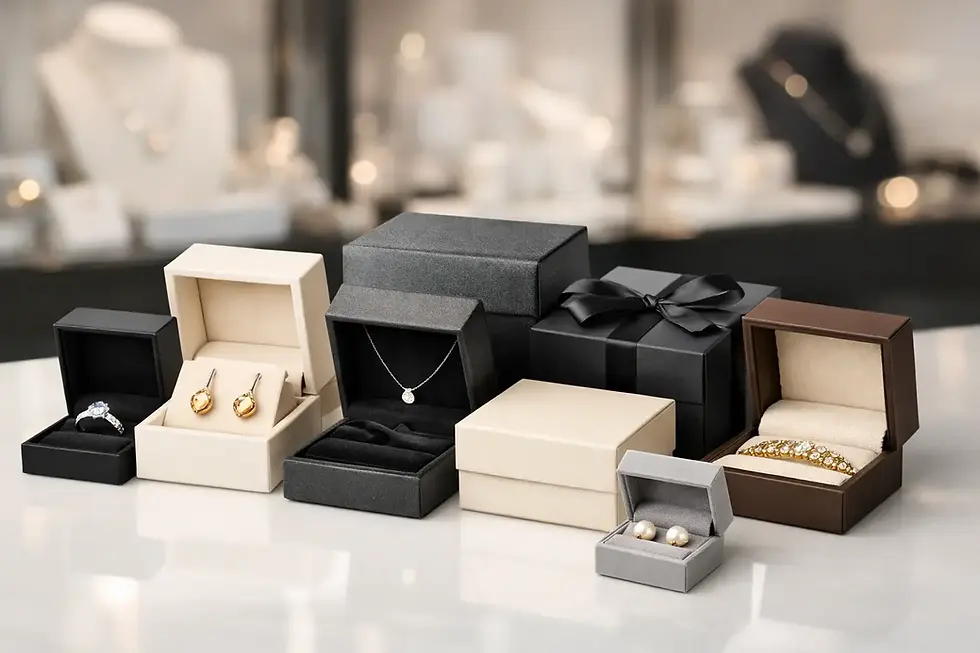
Interior design deserves more attention than many buyers give it. The lining color changes how metals and gemstones appear when the box is opened. A cream or beige lining can soften the look and support warm metals. A deep black or charcoal interior often creates stronger contrast and a more dramatic reveal. Microfiber inserts can add softness and refinement, while firmer pads may better support precise presentation for certain pieces.
Exterior details matter just as much. The sheen level of the leatherette, edge finishing, closure style, and logo method all shape the customer’s first impression. In luxury retail, subtlety often wins. A well-proportioned box with disciplined branding tends to look more confident than one overloaded with decorative effects.
Questions jewelry buyers should ask before ordering
A serious packaging partner should be comfortable discussing production realities, not just sending attractive sample photos. Ask how they control color consistency across production runs. Ask how inserts are engineered for different jewelry categories. Ask what minimums apply to custom sizes, custom colors, and logo treatments.
It is also worth asking how the manufacturer approaches sampling. A sample is not just a formality. It is where proportion, material feel, and brand details are tested before larger commitments are made. If the supplier treats sampling casually, that usually shows up later in production.
Lead time is another practical issue. Jewelry brands often work around launch calendars, holiday deadlines, trade show schedules, and store rollouts. A manufacturer should be able to discuss timing with clarity, including how custom development affects production. Fast promises are less valuable than realistic planning.
For import-focused buyers, communication quality matters as much as factory capacity. Clear answers, organized approvals, and consistent follow-through reduce sourcing risk. Premium packaging requires precision, and precision starts long before production begins.
Why specialization beats commodity sourcing
Commodity packaging suppliers often compete on price and speed. That can be useful for basic needs, but it tends to fall short when the box is expected to reinforce a premium jewelry brand. The difference is not only visual. It shows up in design guidance, product fit, and the ability to build coordinated collections that look intentional in-store.
A jewelry-focused manufacturer understands that packaging works as part of a larger brand system. The box should relate to the shopping bag, pouch, polishing cloth, and display tray. When those elements align, the brand feels established and trustworthy. When they do not, the customer notices the inconsistency even if they cannot explain it.
This is where a specialist like Box Father Company Limited can be a stronger fit for jewelry businesses that care about presentation as much as protection. The value is not limited to producing a leatherette box. It is the ability to support a more complete, elevated packaging program built around jewelry retail.
The best manufacturer is the one that fits your brand position
There is no single best leatherette jewelry box manufacturer for every buyer. The right choice depends on your category, your price point, your visual identity, and how much packaging contributes to your sales strategy. A boutique fine jeweler will evaluate differently than a fast-moving fashion brand or a wholesale supplier serving multiple private labels.
What matters is alignment. The manufacturer should understand your market, translate your brand into physical packaging, and deliver quality that holds up in front of the customer. If the box looks luxurious, feels substantial, and presents the jewelry with confidence, it is doing more than protecting the product. It is helping justify the purchase.
That is the standard worth buying against. When packaging becomes part of the brand experience, the right box does not just complete the sale. It quietly strengthens the next one.


留言