
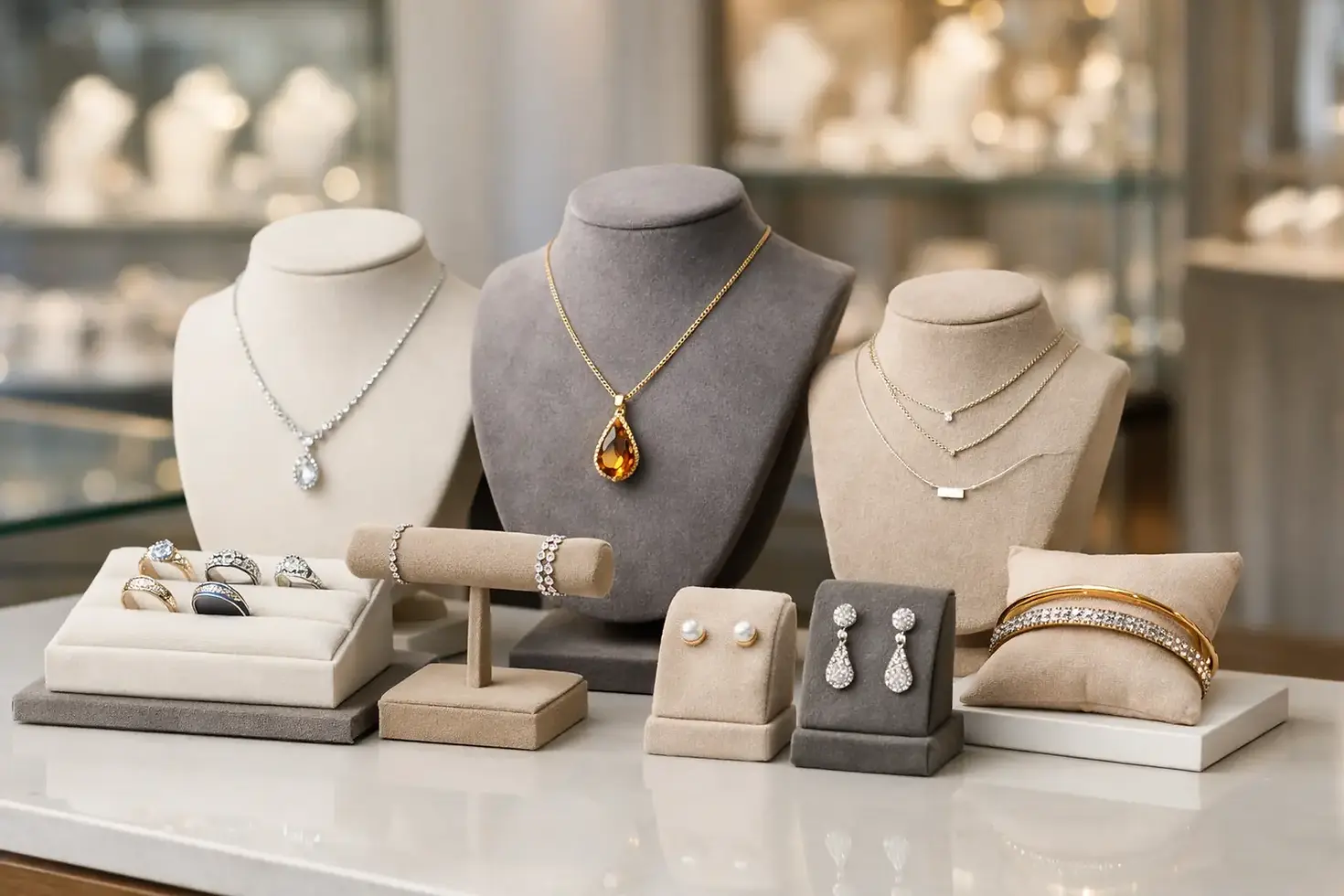
Best Jewelry Store Display Accessories for Sales
- miller194
- 7月14日
- 讀畢需時 6 分鐘
A diamond ring can lose its impact in seconds when it sits on a scratched tray, a crowded counter, or a display stand with the wrong proportions. The best jewelry store display accessories do more than hold merchandise. They direct attention, protect delicate pieces, support a polished sales conversation, and make every collection feel worthy of its price point.
For independent jewelers, luxury boutiques, and private-label brands, the right accessories create consistency across the entire retail experience. A customer should see the same care in a necklace display, a ring tray, and the final jewelry box. That visual discipline strengthens brand recognition and gives customers greater confidence in the piece they are considering.
What Makes a Display Accessory Worth Buying?
The most effective display accessories balance three demands: visual presentation, practical handling, and long-term durability. A beautiful stand that tips easily or sheds fibers onto jewelry is not a premium retail solution. Likewise, a highly functional acrylic organizer may suit back-stock storage but can feel out of place in a refined selling environment.
Start with the jewelry itself. Fine chains need displays that prevent tangling and give the pendant room to be seen. Rings need organized, compact presentation that lets customers compare styles without creating visual clutter. Earrings benefit from height and contrast, especially when small stones or detailed metalwork must catch the light.
Material matters because customers notice it, even if they cannot name it. Soft microfiber, velvet-like textiles, leatherette PU, lacquered wood, and carefully finished metal can all support an upscale presentation. The best choice depends on the collection. Warm wood may complement vintage-inspired gold pieces, while charcoal microfiber can make bright diamonds and white gold stand out sharply.
Best Jewelry Store Display Accessories by Use
Display trays for organized selling
Jewelry display trays are the foundation of a well-managed showcase and sales counter. They allow staff to move a coordinated selection from storage to the selling area without repeatedly handling individual pieces. For customers, trays make comparison easy and give a collection a deliberate, curated appearance.
Choose ring trays with slots that hold bands upright and evenly spaced. For pendants, bracelets, and earrings, compartment trays prevent pieces from touching or tangling. Covered trays are especially valuable for high-value inventory because they add a layer of protection when merchandise is moved between the safe, showcase, and consultation table.
Custom tray inserts offer a stronger branding opportunity than generic black foam. A signature color, a suede-like texture, or a discreet logo can carry your identity into the moment when a customer is deciding between two pieces. The effect should feel restrained. Luxury presentation is often defined by what is edited out, not what is added.
Ring displays that create focus
Ring displays should make customers want to reach for the piece. Individual ring stands, low risers, and graduated ring blocks work well for hero styles, new arrivals, and bridal collections. They place the ring at a useful viewing angle while giving the stone and setting enough space to command attention.
Height is a strategic tool. A few elevated pieces create rhythm inside a showcase, but too many different stand heights can make the display feel busy. Use taller forms for focal products and lower trays for supporting styles. This approach is especially effective when presenting engagement rings, where one standout design should lead the customer’s eye.
Avoid overfilling ring displays. Empty space signals confidence and lets fine details become visible. If every slot is filled, the customer sees inventory before they see craftsmanship.
Necklace busts and pendant stands
Necklace displays are essential because a chain lies differently on a flat tray than it does on the body. Busts and neckline forms show the natural drape of a necklace, the scale of a pendant, and the relationship between metal, gemstone, and skin-tone-inspired backdrop.
For fine jewelry, select busts with clean, narrow profiles that do not compete with the necklace. A tall, oversized form can overwhelm delicate chains, while a shorter display may be better for chokers and collar necklaces. Use a small number of busts in one display area rather than creating a wall of forms. The goal is to create a visual story, not a crowded showroom.
Matching pendant stands are useful for styles that need more flexibility than a bust provides. They are particularly effective for layered necklaces, lockets, and smaller pendants that may be lost against a larger display form.
Earring stands and presentation cards
Earrings need a display that keeps pairs aligned, visible, and easy for staff to remove. Upright earring stands offer the best visibility for drop earrings and hoops, while flat cards and padded inserts can work beautifully for studs and petite designs.
Contrast is particularly important here. Bright metal earrings on a pale background may disappear under showcase lighting. Select a background that makes the silhouette clear without distorting how the metal or stones appear. Neutral tones such as cream, taupe, charcoal, and soft gray are adaptable choices for premium collections.
For brands that sell earrings as gifts, custom earring cards can extend the display system into the final presentation. The card, pouch, box, and shopping bag should feel like parts of one brand experience, not separate purchases from different suppliers.
Bracelet displays and watch pillows
Bracelets require shape support. T-bars, curved forms, and padded bracelet ramps prevent chains from knotting and allow cuffs or bangles to retain their intended profile. The right form also makes it easier for customers to judge width, clasp design, and scale.
Watch pillows serve a similar purpose for timepieces and can also work for heavier bracelets. Look for firm padding with a smooth surface that will not snag straps or leave impressions on soft leather. If watches are a meaningful category for your store, coordinated watch trays and pillows bring greater order to the case while reinforcing a higher perceived value.
Mirrors, risers, and sales-counter essentials
Some of the best accessories are not designed to hold jewelry at all. A well-placed mirror invites customers to picture the piece as their own. Small risers establish hierarchy in a display case. Soft presentation pads give associates a clean surface for showing items during a consultation.
These supporting elements should be visually consistent with the main displays. A polished gold riser, for example, may work with a warm luxury concept but clash with a minimalist silver-and-gray environment. Select one material direction and repeat it with intention.
How to Build a Cohesive Jewelry Display System
Buying individual accessories one at a time often leads to mismatched colors, uneven textures, and an inconsistent retail image. A better approach is to define a display system before placing an order. Consider your core jewelry categories, the dimensions of your showcases, your primary brand colors, and the customer experience you want to create.
A bridal specialist may use soft ivory or dove-gray microfiber trays, elegant ring stands, and understated necklace forms to create a calm, intimate setting. A fashion jewelry brand might choose stronger color contrast, modular earring displays, and flexible trays that can change with seasonal collections. Neither direction is automatically better. It depends on product price, sales environment, and brand personality.
Coordinate your in-store accessories with takeaway packaging whenever possible. When a customer sees a ring presented on a refined tray, then receives it in a box with a matching insert and branded shopping bag, the purchase feels complete. Box Father develops custom jewelry presentation systems with this continuity in mind, from display trays and sewn soft goods to premium boxes and bags.
Common Display Mistakes That Lower Perceived Value
The first mistake is using too many accessories at once. An overcrowded case makes it difficult to identify the pieces that matter most and can make valuable jewelry seem less exclusive. Refresh displays regularly rather than trying to show every item in one place.
The second is neglecting maintenance. Dust, worn fabric, loose threads, faded surfaces, and scratched acrylic communicate carelessness. Build display cleaning and inspection into daily opening or closing procedures. Replacing a tired tray can have a greater impact on store perception than adding another decorative prop.
Finally, do not choose displays solely by unit cost. Less expensive accessories may need frequent replacement, fail to protect merchandise, or weaken the visual standard you have worked to establish. Evaluate their cost against longevity, appearance, staff efficiency, and the revenue potential of a more convincing presentation.
The strongest jewelry displays leave customers with a clear feeling: every detail has been considered. Select accessories that give each piece space, protect its finish, and reflect the quality your brand promises before a customer ever opens the box.


留言